Recently I delivered a webinar for the Great Collaboration highlighting how Food Resilience is needed to counter the fragility of our food system and the stacking crises that we’re facing. With a mix of Councillors and Community members, I focused on what we must start doing at the local level to build capacity and plan for crisis response.
It’s my experience that Councils don’t have the experience in food systems or how to manage complexity, especially when facing multiple overlapping crises developing in real time. Communicating the urgency of local action and practical steps is a key takeaway of this talk, and central to the work I do both locally through Little Woodbatch Farm, as well as at the county level with the Shropshire Good Food Partnership.
Summary:
“Daphne presented the current vulnerabilities in the UK's food system, including heavy dependence on imported food (40% overall, higher for horticultural produce), high levels of ultra-processed foods, and lack of seed resilience. She outlined eight steps for building food resilience at the community level, including getting people talking about the issue, assessing local assets and gaps, developing action plans, and building skills and capacity. The discussion covered practical examples like community seed banks, growing spaces, and local food distribution networks. Participants shared their experiences and challenges, including difficulties engaging town and parish councils on food resilience issues. The conversation also touched on regenerative agriculture, the impact of COVID-19 on local food systems, and potential collaboration between food partnerships and corporate entities.”
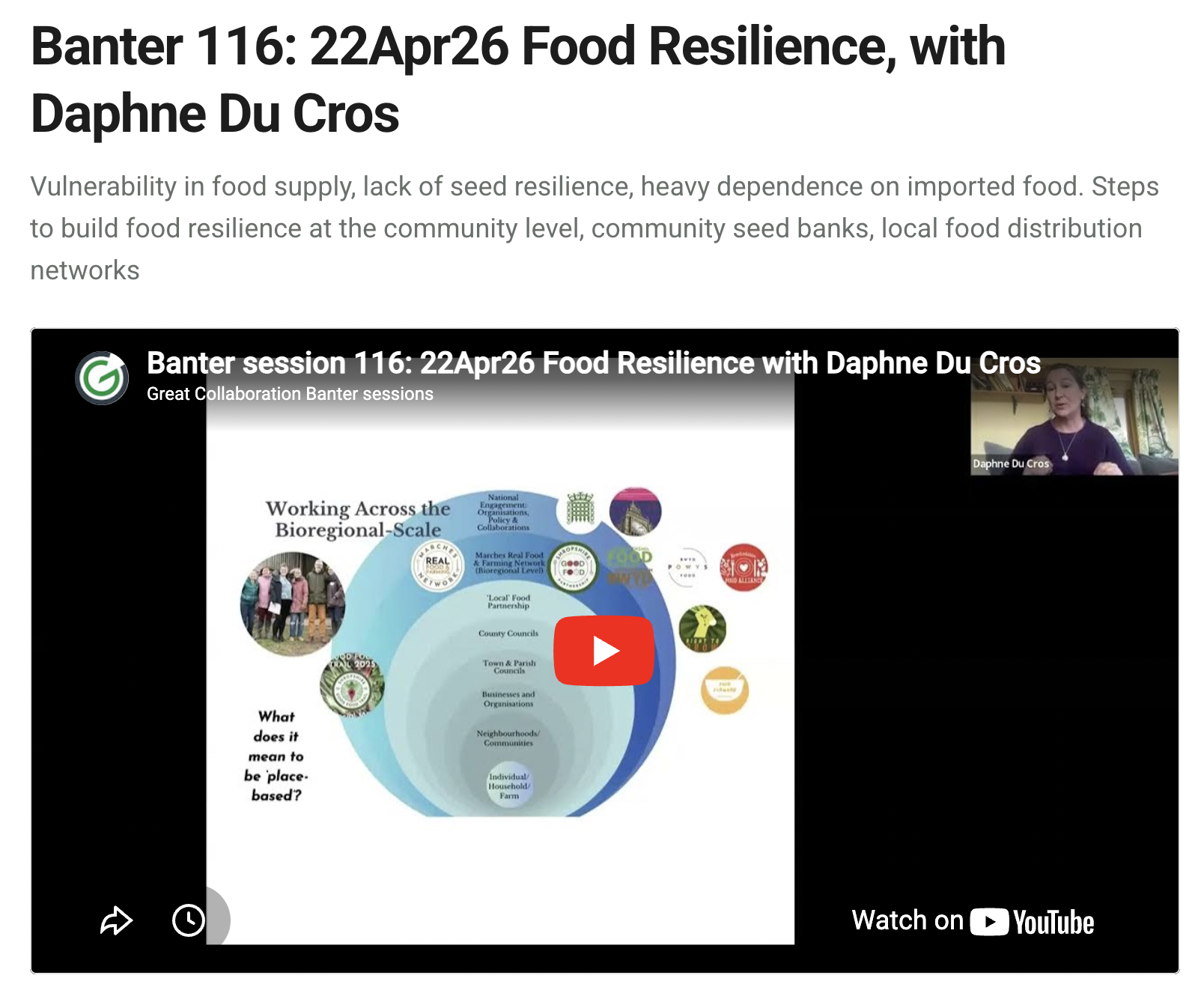
YouTube Video: Food Resilience with Daphne Du Cros